Chasing Longevity Is a Team Sport
People assume getting stronger on the bike is all about riding long, hard miles. And that might have been true ten or twenty years ago. Today, at 62, I’ve learned that most of the work that keeps me riding happens when I’m nowhere near my bike. These days It takes a village to keep me riding.
I’ve already talked about what terrible shape and the health issues I was dealing with when I first decided to reacquaint myself with what Molly calls my ‘mistress,’ that is to say, my bike, “Ruby”. But probably the most debilitating issue I had dealt with was sciatic pain. At its worst the pain was so intense that walking a block seemed insurmountable.
If you don’t know what sciatica is, consider yourself lucky. The sciatic nerve goes from your lower back and winds its way down your legs. Along the way it pass through muscles in your glutes. One of those muscles is the piriformis. If that muscle gets tight or inflamed it will often put pressure on the sciatic nerve and can contribute to sciatic pain. That’s not the only way sciatic pain can orignate, it’s how it presented for me.
So long before I even considered riding my bike again I started working with a chiropractor, an acupuncturist and started visiting Stretch U which is passive stretching. These three things got me to the point of being able to even consider cycling again.
Before I could even ask “how do I become a stronger cyclist?” the question was, “how can I gain mobility so that I feel pain free and safe riding a bike?” Here’s the village that keeps me riding.
Chiropractic Care: Keeping Everything Moving
Chiropractic care has slowly but surely improved my body at the structural level. Traditional medicine tried pills and generic PT exercises that frankly didn’t work for me. Chiropractic work wasn’t miraculous, It wasn’t one adjustment that fixed everything, but over time it has really helped my posture, by adjusting my spine so that I’m more comfortable in my body and on the bike. I’m sure a chiropractor would explain the process much differently than I am, but that’s how I’ve experienced it. Although it’s been a while since I’ve felt sciatic pain, I keep going for chiropractic adjustments because if I miss a couple of weeks, I feel it.
Stretch U: Flexibility and Mobility
For me that pain made me want to move less, so I sat around a lot, at work, at home in the car, which only made things worse. So, I decided that I needed to work on stretching in order to reduce inflammation and increase mobility. I started going to Stretch U. At first I went once a week. Eventually I started going twice a week. This year marks four years since I first walked into Stretch U. In that time my mobility has increased. My flexibility has increased to the point where I can now get my legs raised to over 90 degrees. My hamstrings are more flexible, my calves, my glutes and quads are much more flexible than when I started. And while cycling has a way of tightening these muscles, consistent stretching helps keep and improve mobility and stay pain free.
Could I just stretch on my own? Probably yes. Would I do it? Maybe. Maybe not. Getting stretched by someone else helps because they won’t go easy on you and it creates a stretch routine.
Strength Training: The Biggest Change
As we grow older we lose muscle. Not only do we lose muscle but that loss accelerates as we get into our sixties and beyond. So in this season of life strength work, whether it be lifting weights, or doing functional body weight work or a combination, isn’t about bulking up or physical appearance, it’s about being able to feel stronger on the bike, climb stairs, lift luggage, carry groceries, prevent falls, and getting off the floor if you do fall. In short, it’s about maintaining independence. It’s about being able to carry groceries and walk the beagles in my eighties.
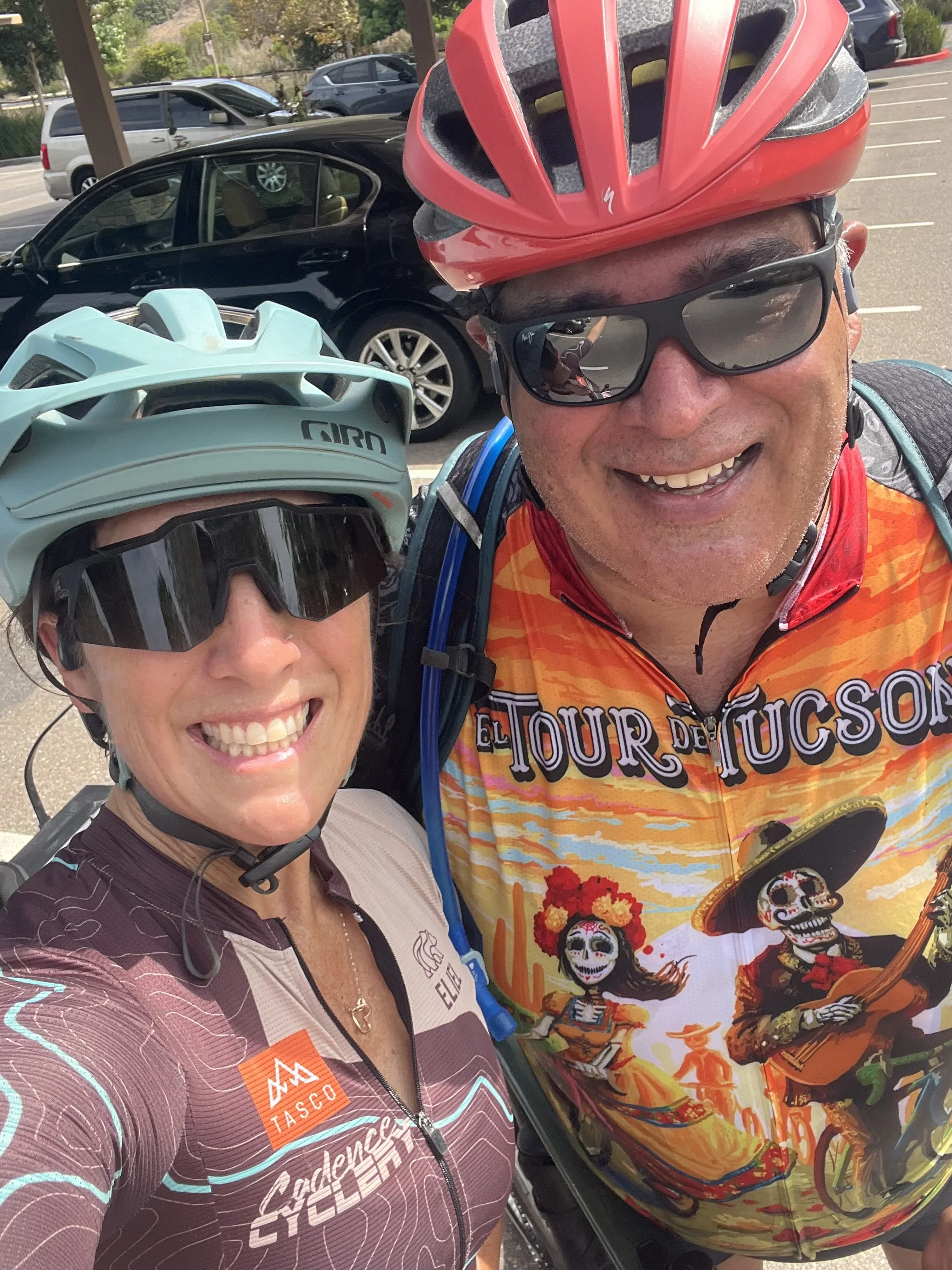
Post ride picture:
Coach Chi
Because the bike is my vehicle for chasing longevity, last November I picked up “Weight Training for Cyclists” by Ken Doyle and Eric Schmitz. The authors develop an annual training plan with various phases that emphasize different aspects as you progress in the plan. It starts with a 4 week stabilization phase where you work on exercises that help with balance and stability. It continues on building functional strength for cyclists and maintenance once the cycling season begins. Their plan is geared towards racers but it’s easily modified for recreational cyclists like me. Most importantly, I work with Coach Chi to develop strength workouts that fit me for the type of riding I do and the stage of life I’m in. Having Coach Chi in my corner lets me focus on the work instead of wondering whether I’m training the right way. She knows what my ultimate goals are on and off the bike, and she devises the plan for getting there.
Massage: Recovery Is Part of Training:
Most people think a recovery day means doing nothing. Sometimes it does, but those days are more the exception than the rule. For me a recovery day might mean an easy light spin on the Peloton bike; a walk; compression boots, a stretch session and at least once a month, a massage. Massage helps speed recovery and reducing soreness. I usually get a deep tissue massage which applies more pressure to the muscles. Recovery isn’t taking time off from training. Recovery is part of training.
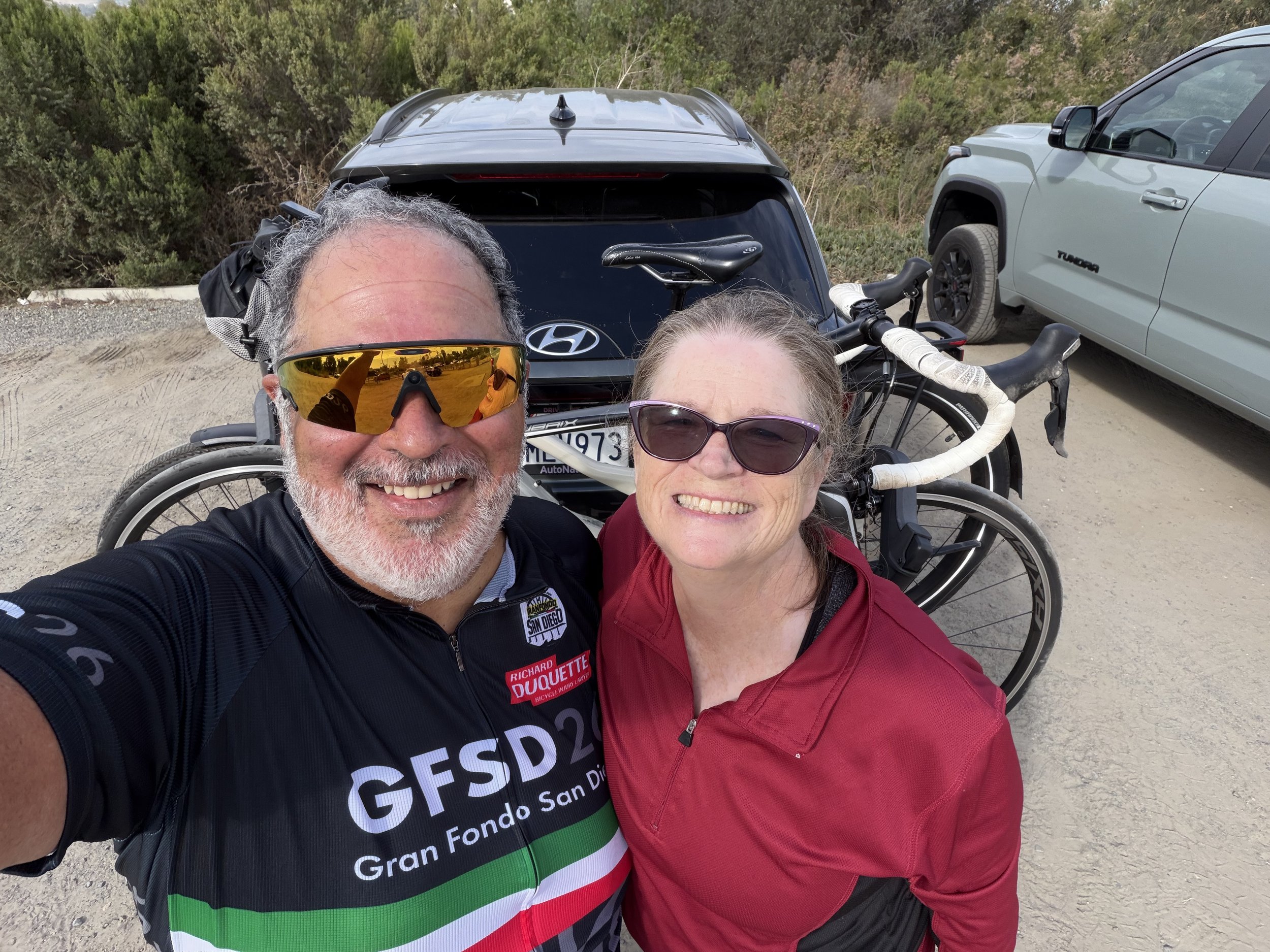
So there you have it, my support village. But I would be remiss if I didn’t count Molly as the most important villager. Not only is she supportive in my efforts by providing encouragement, but she also rides with me, she provides support for me during cycling events, and in long training rides. The fact that I don’t have to worry about the home front when I’m out on the bike counts for a lot. In my village, Molly is the Mayor.
Every ride you see on Strava represents far more than time on a bicycle. Behind every ride are people who help me stay healthy enough to ride it. That’s the biggest lesson I’ve learned about longevity. We don’t get there alone.
Until next time,
Enjoy the ride. 🚴🏽♀️